

-

 Sold out
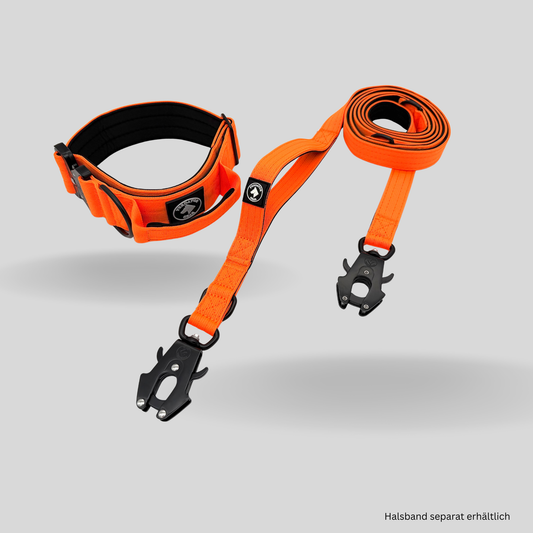
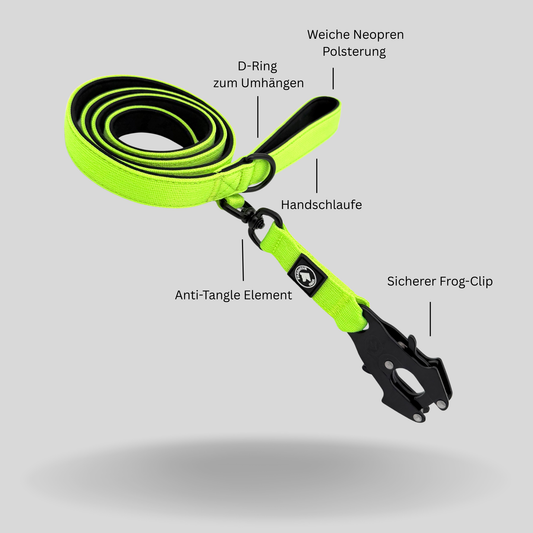
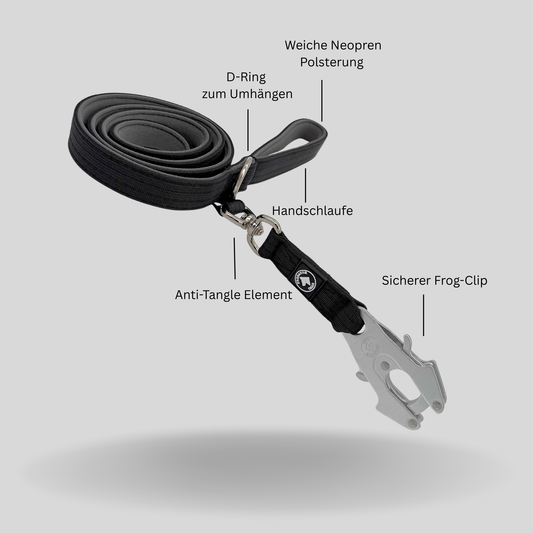
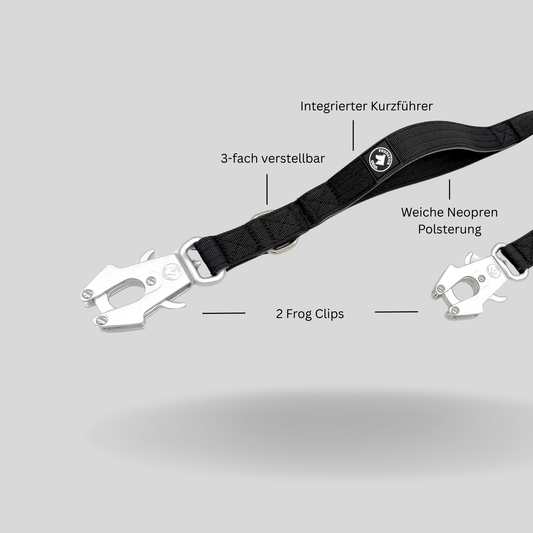
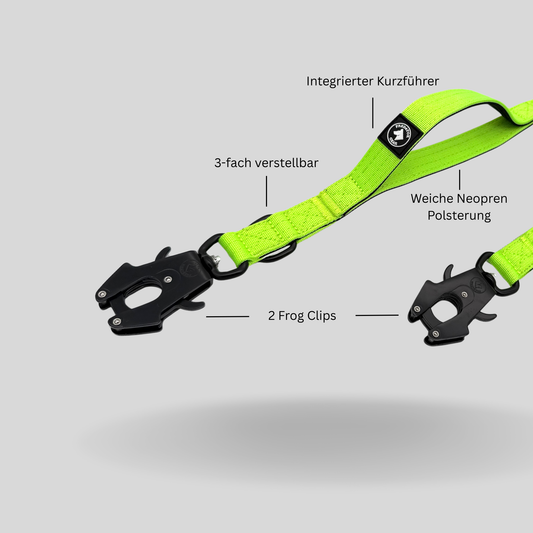
IGNITE - adjustable leash 135-250 cm
Regular price €49,99 EURRegular price -
SHOCKWAVE - adjustable leash 135-250 cm
Regular price €49,99 EURRegular price -
MIDNIGHT GOLD - adjustable leash 135-250 cm
Regular price €49,99 EURRegular price -
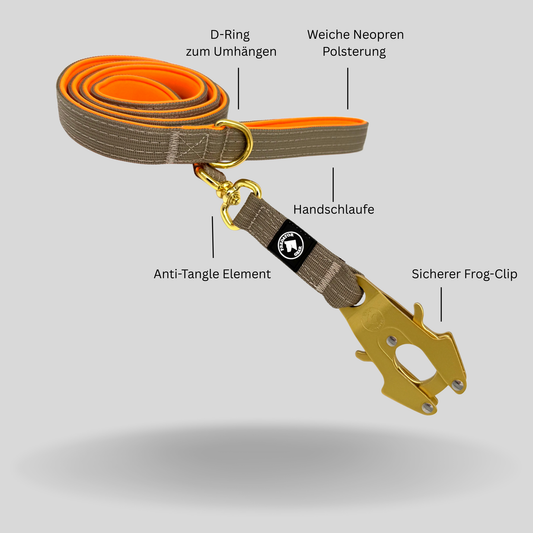
SUNSET - tactical lead 150 cm
Regular price €39,99 EURRegular price -
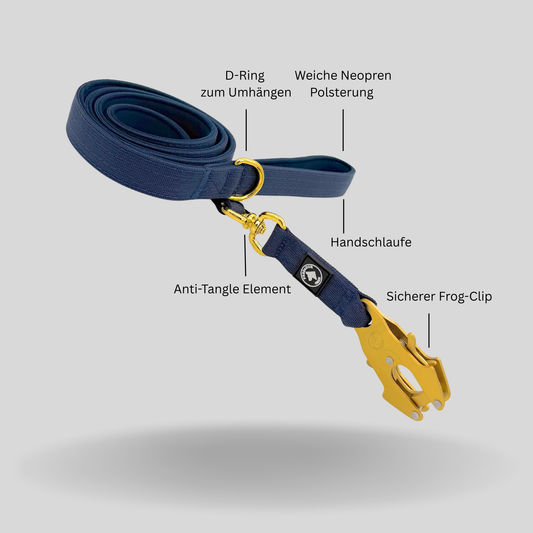
MIDNIGHT GOLD - tactical lead 150 cm
Regular price €39,99 EURRegular price -
SHOCKWAVE - tactical lead 150 cm
Regular price €39,99 EURRegular price -
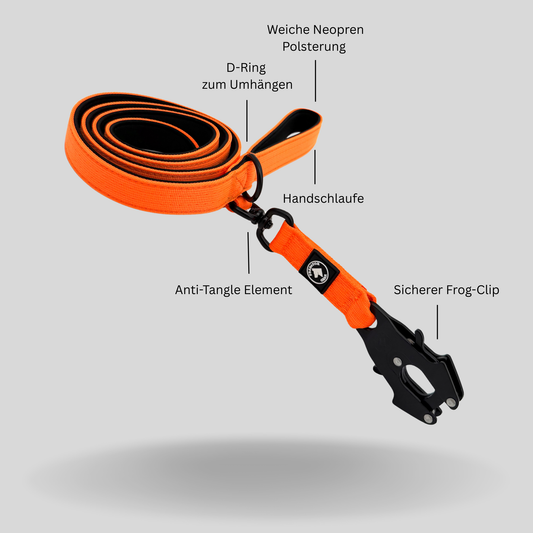
IGNITE - tactical lead 150 cm
Regular price €39,99 EURRegular price -
VOLTAGE - tactical lead 150 cm
Regular price €39,99 EURRegular price -
BLACKOUT - tactical lead 150 cm
Regular price €39,99 EURRegular price -

 Sold out
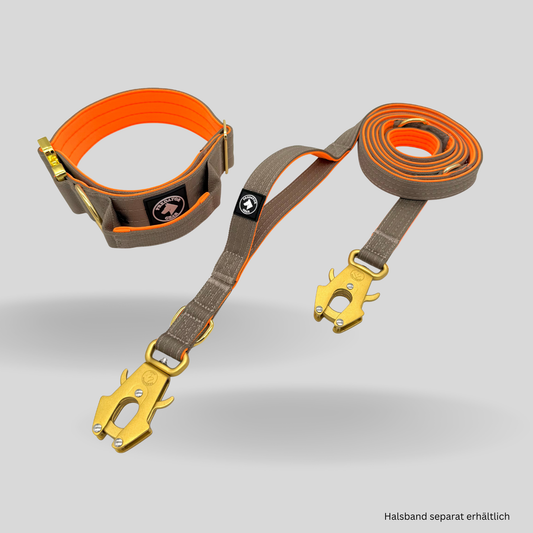
SUNSET - adjustable leash 135-250 cm
Regular price €49,99 EURRegular price -
BLACKOUT - adjustable leash 135-250 cm
Regular price €49,99 EURRegular price -
VOLTAGE - adjustable leash 135-250 cm
Regular price €49,99 EURRegular price












Discover more

My dog pulls hard: how do I train loose-leash walking?
Loose-leash walking is primarily a matter of communication. If your dog pulls hard, they have learned that pulling gets them to their destination faster. The most effective training is therefore based on consistency: as soon as the leash tightens, you stop or change direction. The dog thus learns that only a loose leash leads to success.
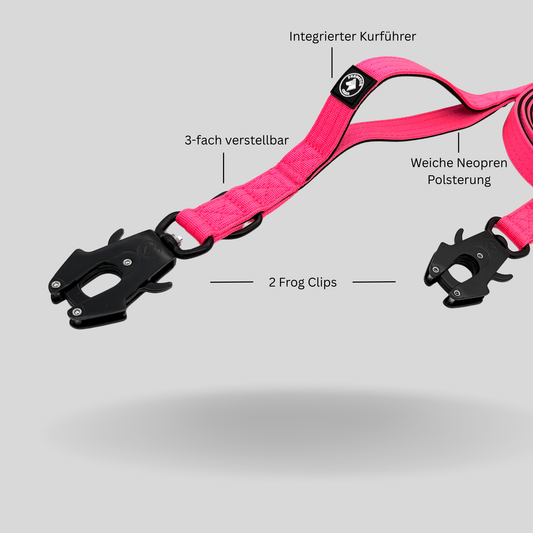
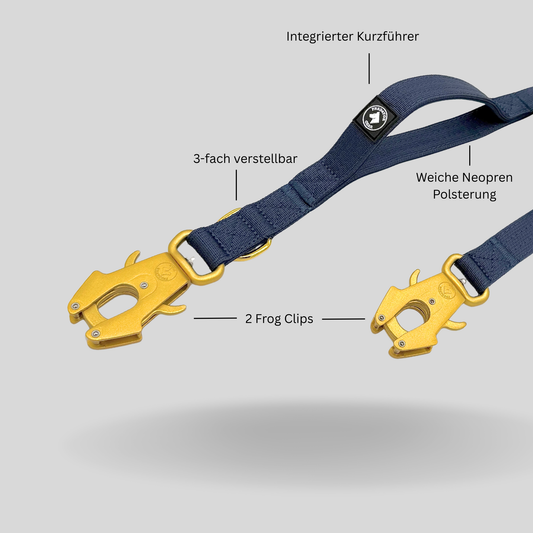
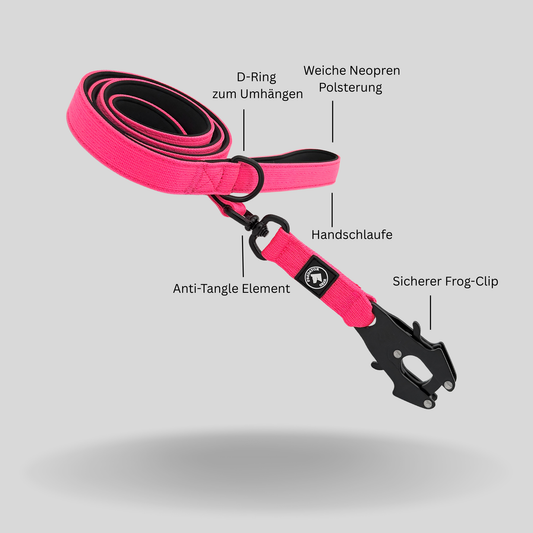
However, successful training requires that you can rely on your equipment. If you are afraid that a carabiner might break or the leash might slip out of your hand, this tension transfers directly to the dog. A dog leash with a safety carabiner gives you the necessary peace of mind, as accidental opening or breaking is mechanically impossible.
Dog Leash Clasps: Which is the Safest?
Choosing the right clasp comes down to mechanical reliability under load. While standard bolt snaps (the classic slide clasps) are widely used, they quickly reach their limits when exposed to dirt or strong pulling. Sand in the mechanism can cause them to jam, or they can accidentally open themselves unnoticed due to unfavorable friction on the collar – for example, when rolling or shaking.
Dog leashes with safety carabiners, as used in climbing or tactical gear, are considered the safest choice. These clasps are designed for maximum breaking strength and feature a mechanical lock. Accidental opening due to external pressure is virtually impossible. Especially for large breeds or easily startled dogs, this system provides the assurance that the connection will remain secure even with sudden impulses. Anyone who wants to be absolutely certain should opt for a carabiner that can only be opened with a deliberate hand movement, thus guaranteeing full control in every situation.